Zen Garden
Liverpool
This garden was built more than 14 years ago and has matured remarkably well.
I remember the clients giving me a very open brief and more or less saying, “Design it how you would like it.” The only requirement was to include a wildlife pond.
The garden was quite large, south-facing and perfectly flat. Being near the coast, the subsoil was remarkably sandy, and I knew that any planting would require plenty of organic material.
My original concept was to make the garden elemental, i.e. simple and composed of natural materials: water, stone, timber and plants. As the years passed and the planting matured, I started calling it a Japanese garden, or even a Zen garden. This was perhaps rather cheeky, but it reminds me of many of the elements found in these types of garden.
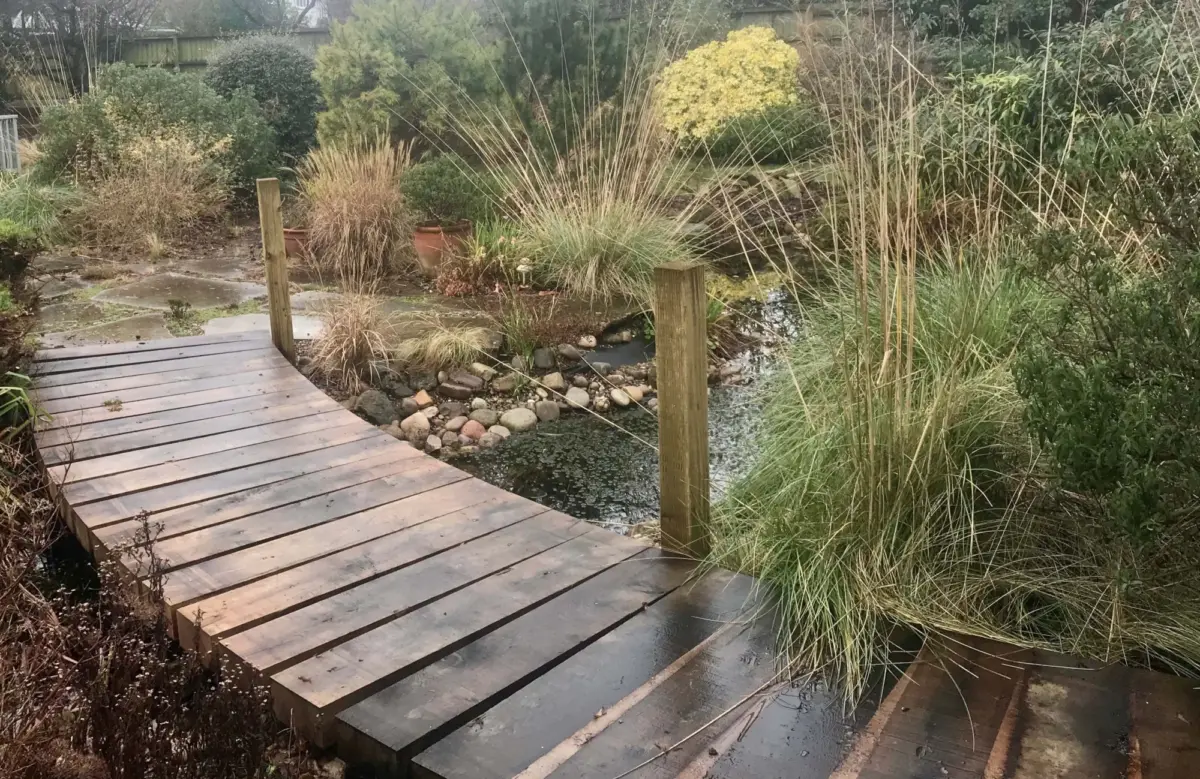
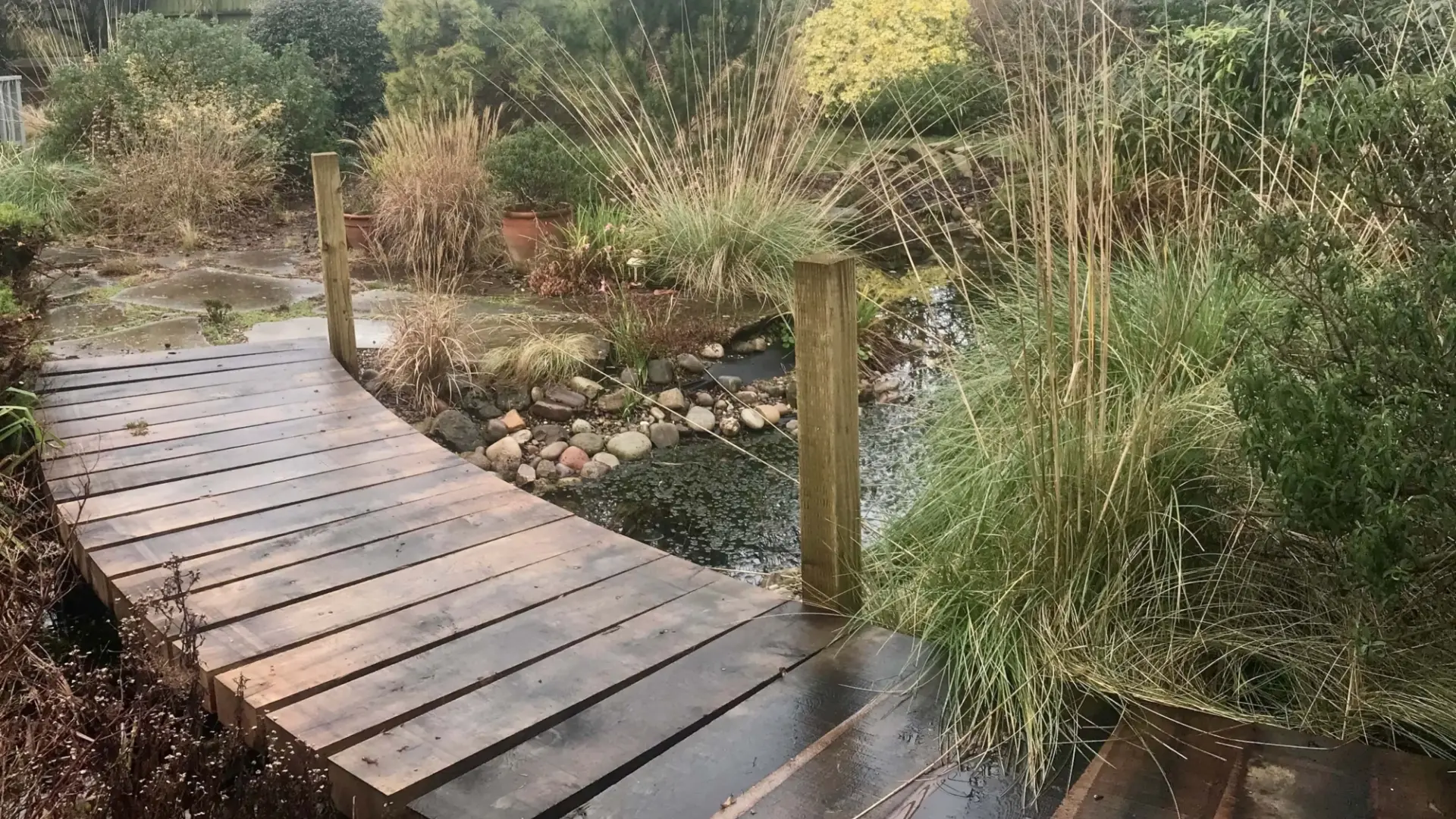
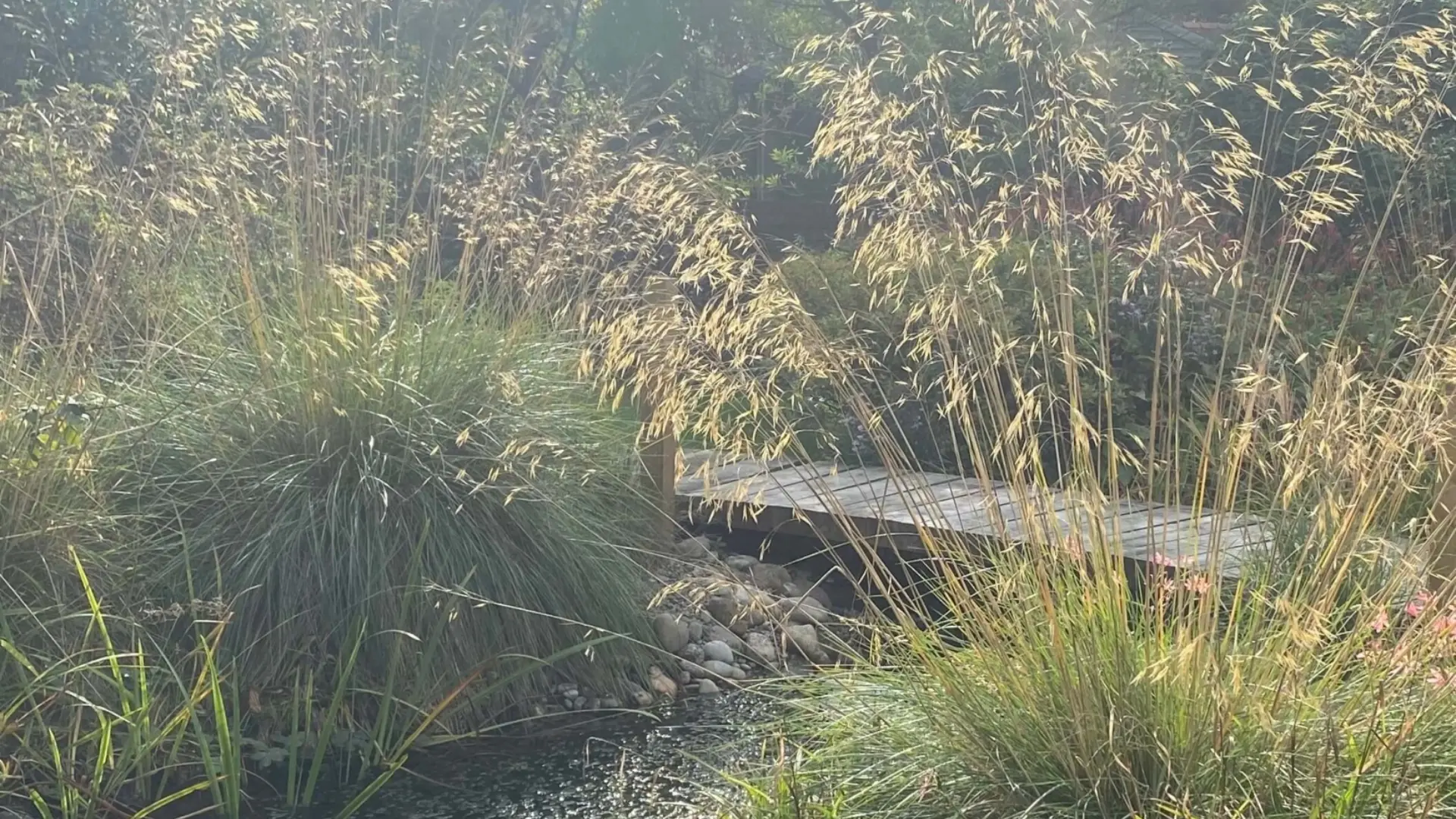
The central feature is a large wildlife pond, complete with a timber-sleeper bridge and extensive planting.
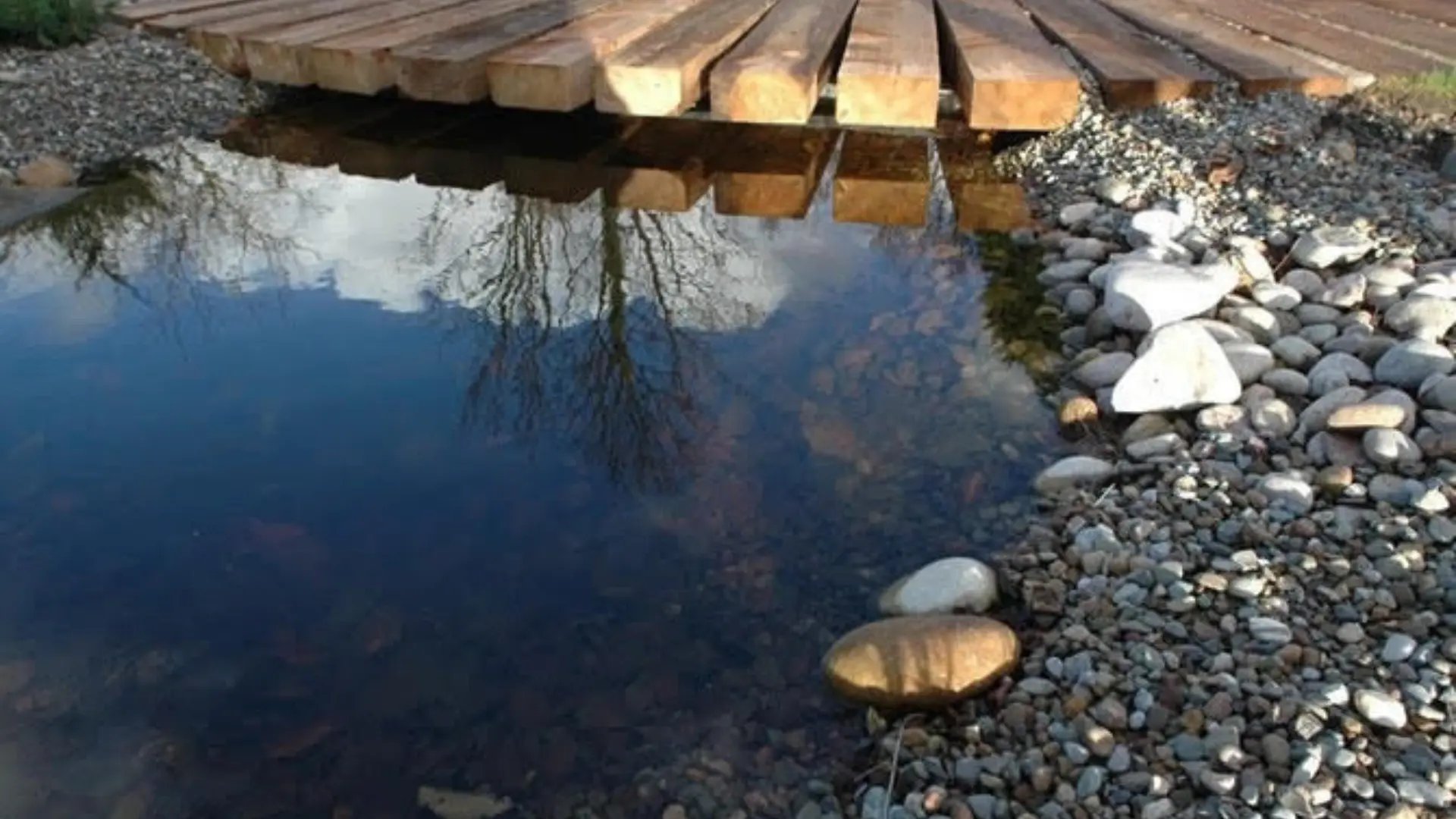
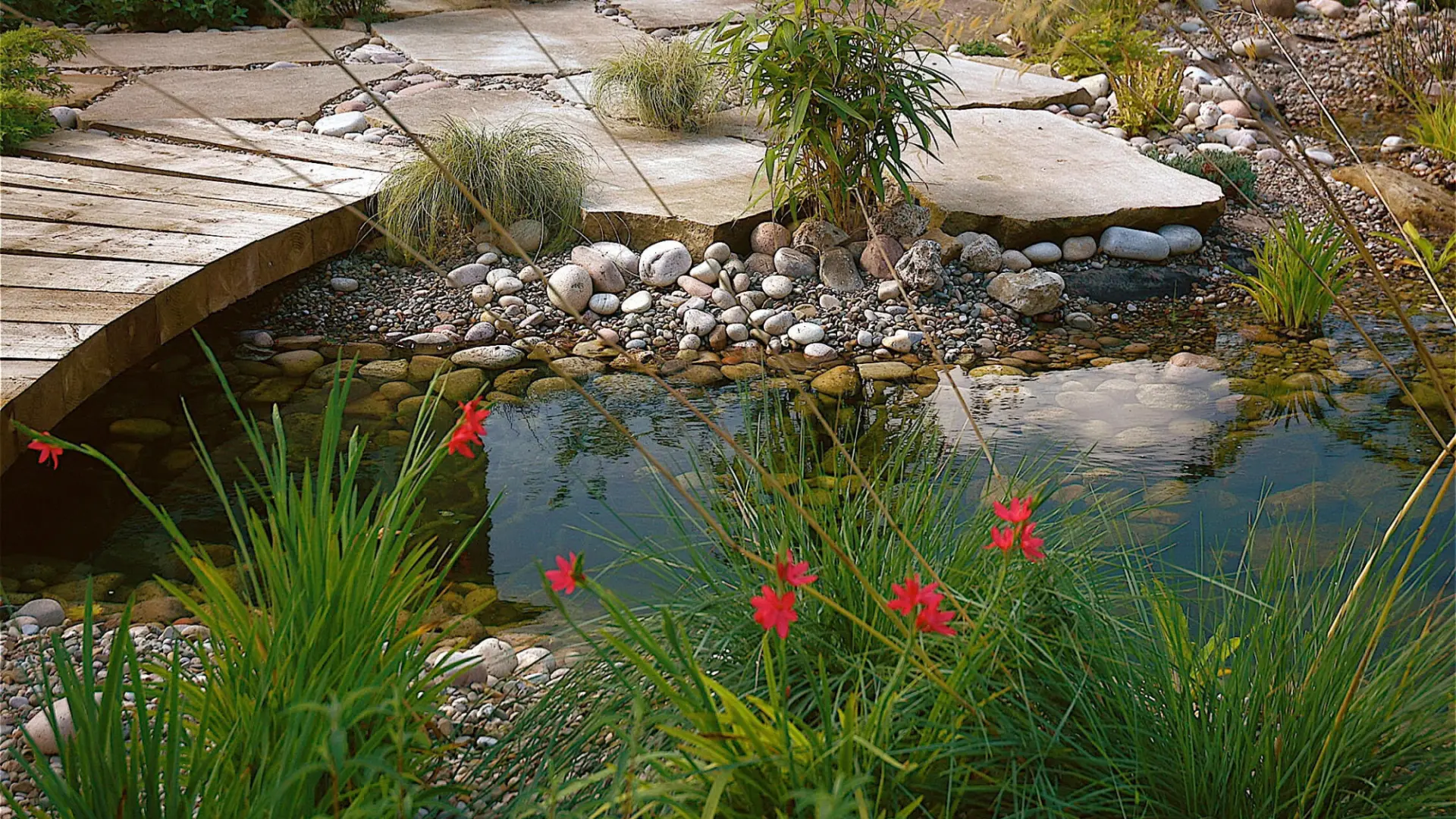
The profile of the pond had to be gentle and covered with gravel and pebbles to allow wildlife to enter and leave the water and enable birds to use the shallows.
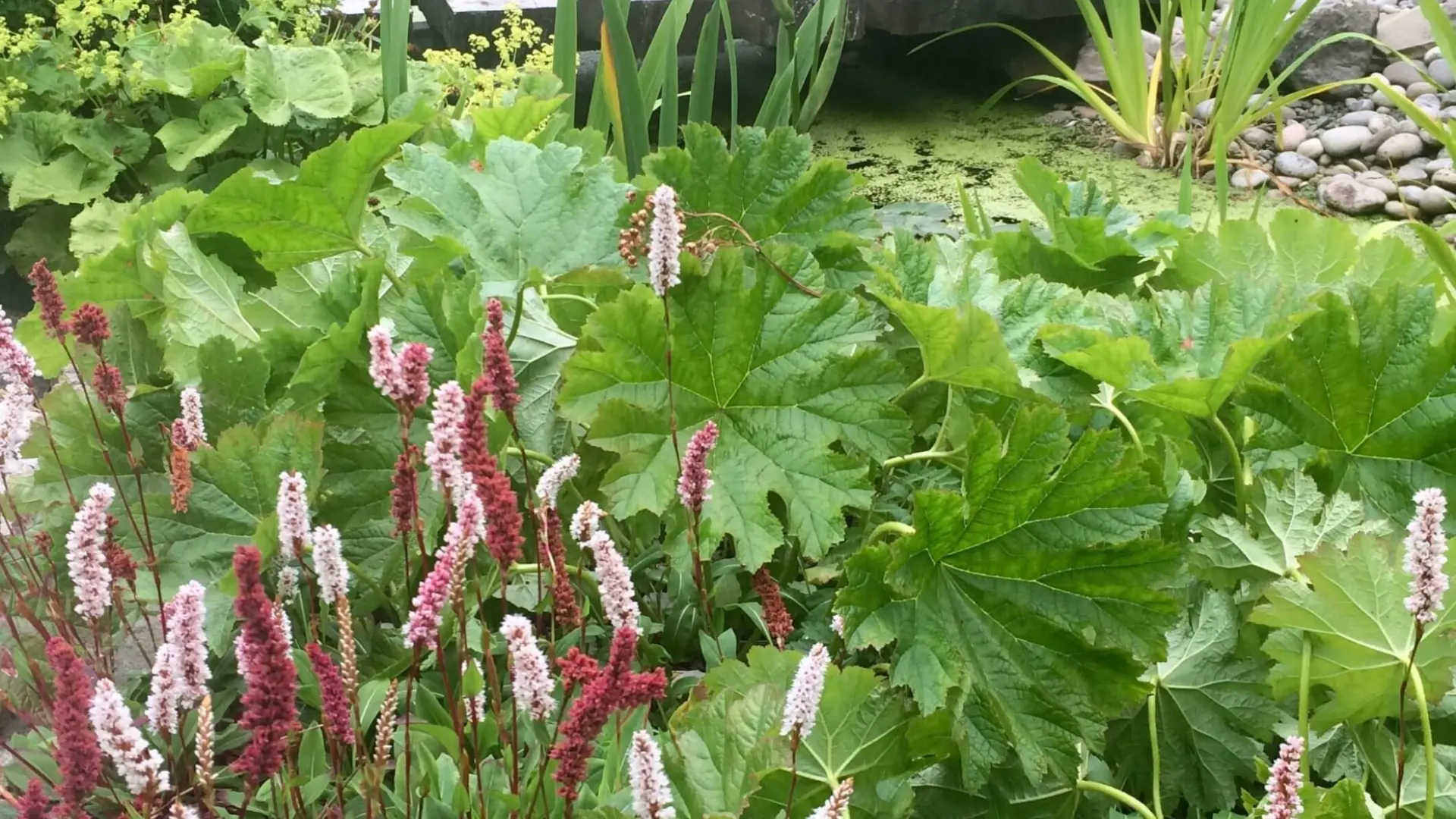
The pond features a waterfall and filter to keep the water clear. It is surrounded by plants suited to a waterside setting, including rodgersia, rheum and grasses such as stipa and miscanthus.
Another feature is the curved bridge, constructed using timber sleepers and discreetly supported by two metal beams. The bridge links the house with the summerhouse in the far corner of the garden.
Other plants include large drifts of perennials such as persicaria, rudbeckia, schizostylis and several euphorbias. There are also many shrubs, including camellia, skimmia, cotinus and Japanese acers, providing shape, texture and year-round colour.
Unsurprisingly, the garden has become a haven for wildlife, including the relatively rare red squirrel and, one year, an entire family of mallard ducks.
The final two images show the garden in its formative stages.
Gallery

“Stunning celebrity style in your garden”
Alan Titchmarsh described a
garden designed by David Andersen