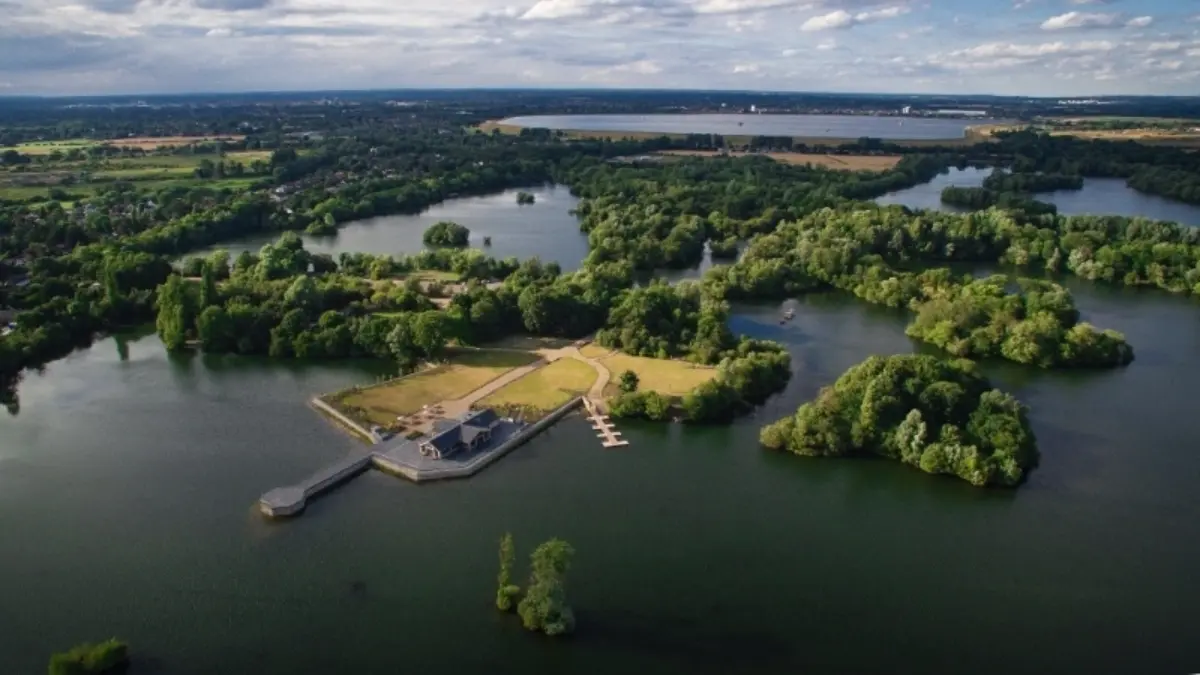
Project at Wraysbury Lakes
Wraysbury
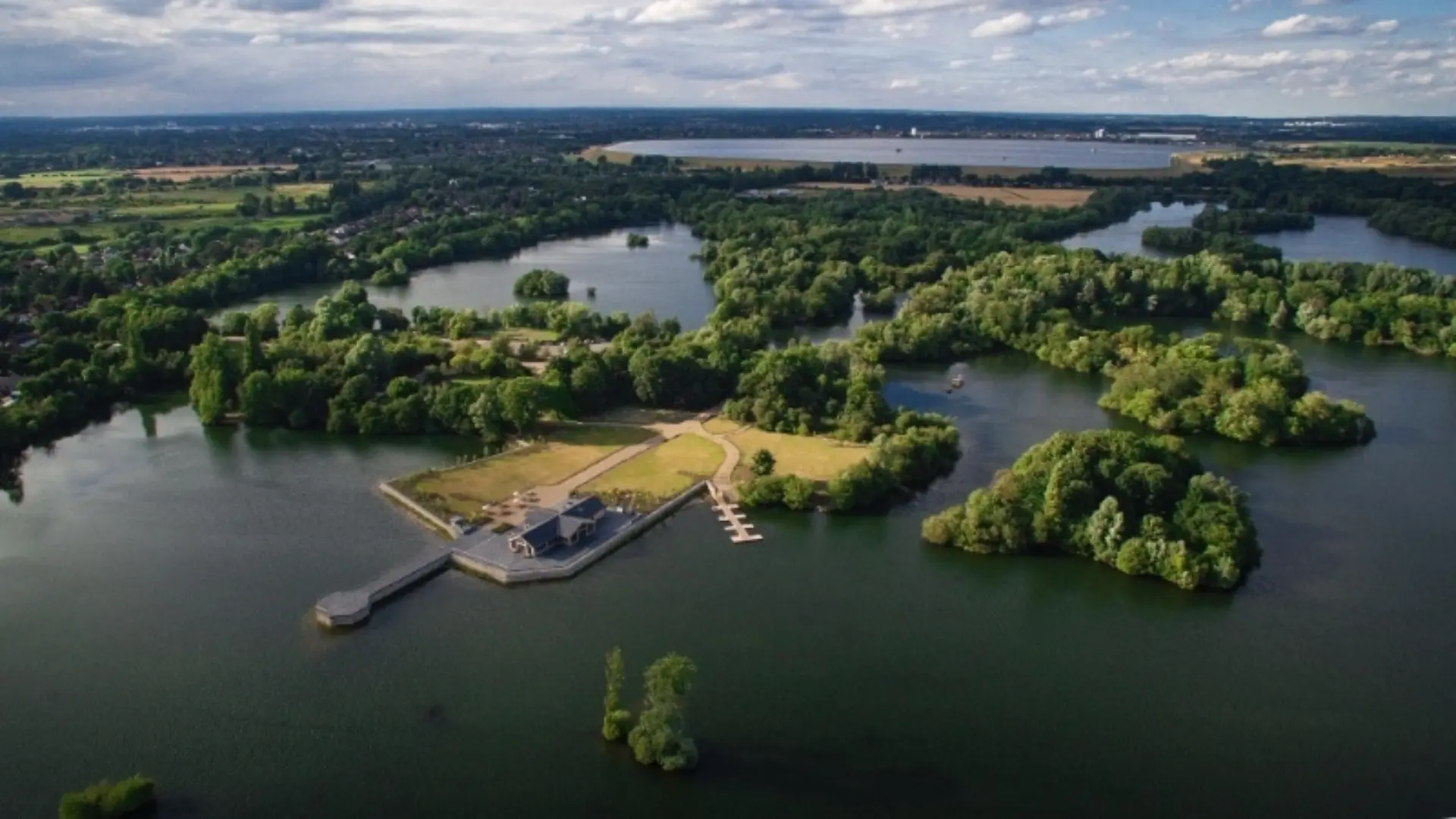
We were proud last year to be asked to design and build a large-scale landscape at the famous Wraysbury Lakes near Heathrow Airport. Wraysbury Nature Reserve is a large, semi-wild landscape of more than 140 acres and has SSSI status (Site of Special Scientific Interest).
History — The reserve developed over the last 100 years, primarily because the site was used to quarry aggregates for the Heathrow runways and other projects. As the sand and gravel were removed, the remaining pits filled with water, attracting new plant life and, in turn, insects, fish, amphibians, reptiles, birds and mammals. By the time of the Second World War, this process was already forming the lake at W1 Wraysbury Nature Reserve, which was 50 acres in size. Wraysbury 2 took longer, probably only beginning to form during the 1950s.
A Haven for Wildlife
The atmosphere around the lakes is magical. The lake and its margins are havens for a host of indigenous and migratory birdlife and other animals.
The waters offer sustenance and shelter to everything from cormorants and migratory gulls to herons, warblers and the SSSI-noted goosander and gadwall ducks. A lone otter also appears on the lake from time to time, feeding here before disappearing and returning again.
Other wildlife gathers around the shores, with toads, frogs, newts, diving beetles, pond skaters and water scorpions all making an appearance among a multitude of other insects, amphibians and reptiles.
Away from the water, the meadows, shrubberies and woodlands provide another playground for birds and mammals. Warblers, wrens, dunnocks and goldcrests feast on the insect life and diverse flora, while woodpeckers, buzzards, owls, roe deer and Chinese deer are just a few of the regular visitors to the shaded copses of oak, ash, elm and sycamore.
Gallery

“Stunning celebrity style in your garden”
Alan Titchmarsh described a
garden designed by David Andersen